This Hidden Corner of Canterbury Will Blow Your Mind
You know that feeling when you stumble upon a place so quietly magnificent, it feels like a secret? That’s exactly what happened in Canterbury. Beyond the well-trodden path of the cathedral crowds, I discovered quiet alleys, ancient timber frames, and unexpected architectural gems most visitors never see. It’s not just history—it’s living, breathing craftsmanship. If you’re after unique architecture with soul, Canterbury delivers in ways you’d never expect. This is not a city preserved under glass; it is one that breathes through its stone and timber, whispering stories to those who walk slowly and look closely. Here, every archway, every crooked lane, and every moss-covered wall holds a chapter of England’s architectural evolution.
Stepping Into a Living Postcard
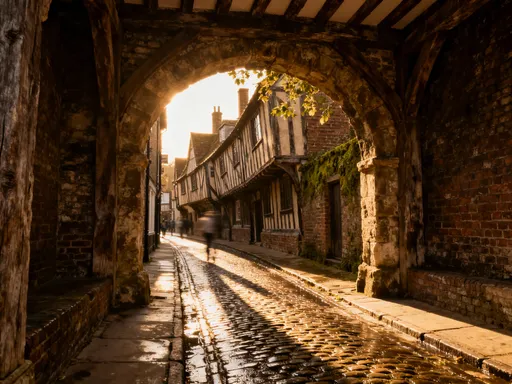
From the moment you enter Canterbury, the city wraps around you like a well-worn storybook. The cobbled streets glisten after a morning rain, reflecting the warm glow of honey-colored stone and centuries-old brickwork. Overhanging Tudor buildings lean gently toward one another, their upper floors jutting out as if leaning in to share a secret. The light filters differently here—softer, golden, catching the texture of hand-chiseled walls and weathered wood. This is not a reconstructed village or a staged heritage site. It is a real, working city where history isn’t displayed behind ropes but lived in every day.
The architectural journey begins long before you reach the cathedral. As you pass through the city’s historic gates or follow the winding path along the River Stour, you’re met with a seamless blend of styles—medieval foundations cradling Georgian facades, Gothic spires rising above Saxon footprints. There’s a harmony in the chaos, a rhythm to the way buildings from different eras coexist without competing. A 14th-century merchant’s house might stand shoulder-to-shoulder with a carefully restored 18th-century townhouse, each respecting the other’s presence. This layered aesthetic is what gives Canterbury its depth, transforming a simple walk into a tactile experience of time.
What makes this city so emotionally resonant is not just the beauty of its structures, but their accessibility. You don’t need a guided tour to feel connected to them. A mother pushing a stroller passes beneath an arched gateway older than the monarchy. A baker opens his shutters in a building that once housed a medieval guild. These are not museum pieces—they are part of daily life. That intimacy is rare. In many historic cities, preservation creates distance. In Canterbury, it fosters connection. The architecture isn’t frozen; it’s evolving, adapting, and still shaping how people live, work, and gather.
The Cathedral’s Silent Storytellers
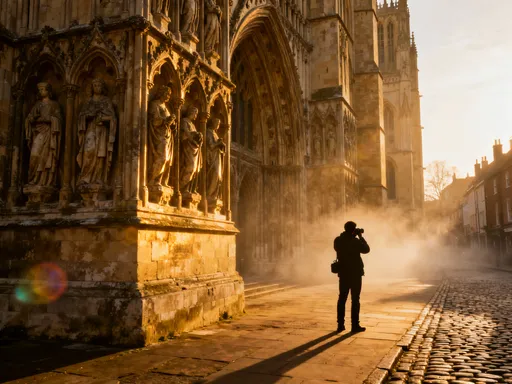
No discussion of Canterbury’s architecture can begin without the cathedral—a masterpiece that has grown, changed, and endured for over fourteen centuries. More than a place of worship, it is an architectural chronicle written in stone, mortar, and light. Its origins lie in the late 6th century, when St. Augustine established a Christian mission here, but what stands today is the result of centuries of expansion, destruction, and rebirth. Each addition tells a story—not just of faith, but of shifting aesthetics, technological advances, and cultural transformations.
The Norman crypt, cool and dimly lit, is one of the oldest surviving parts of the structure. Its rounded arches and massive pillars reflect the Romanesque style brought to England after the Norman Conquest. Standing here, you can feel the weight of history in the thick stone walls and low ceilings, designed to inspire reverence through solidity. Above ground, the transition to Gothic architecture is striking. The choir, rebuilt after a fire in the 12th century, soars with pointed arches, ribbed vaults, and expansive stained glass. The light that filters through the windows transforms the interior into a kaleidoscope of color, shifting with the time of day and season.
Perhaps the most moving space is the Trinity Chapel, where the shrine of Thomas Becket once stood. Though the shrine was destroyed during the Reformation, the chapel remains a place of profound stillness. The stonework guides your gaze upward, drawing you into a sense of vertical aspiration—a hallmark of Gothic design meant to elevate the soul. Yet, despite its grandeur, there is an intimacy to the details: the hand-carved capitals on the columns, the delicate tracery of the windows, the worn steps smoothed by centuries of pilgrims’ feet. These are not just architectural features; they are silent storytellers, each bearing witness to generations of devotion, conflict, and renewal.
What makes the cathedral truly exceptional is its ability to balance scale with soul. It is vast enough to host royal coronations and international choirs, yet quiet corners invite solitary reflection. The cloisters, with their serene arcades and peaceful garden, offer a retreat from the world outside. This duality—monumental and personal, ancient and alive—is what defines Canterbury’s architectural spirit.
St. Martin’s Church: Where History Begins
Just a short walk from the cathedral, nestled among quiet residential streets, stands St. Martin’s Church—a modest building with an extraordinary legacy. Often overlooked by tourists drawn to grander sites, it is, in fact, one of the oldest churches in continuous use in England. Its origins trace back to the 6th century, possibly earlier, when Queen Bertha, a Frankish princess and early Christian convert, used it as her private chapel before St. Augustine’s arrival. This makes St. Martin’s not just a place of worship, but a foundational site in the story of Christianity in England.
The church’s architecture reflects its long and layered history. The nave walls incorporate Roman bricks salvaged from nearby ruins, a testament to the reuse of materials and the blending of civilizations. The Saxon tower, though modified over time, retains its original character—simple, sturdy, and unadorned. Inside, the atmosphere is one of quiet reverence. Sunlight filters through small, clear glass windows, illuminating ancient baptismal fonts and weathered wooden pews. Moss clings to the outer walls, and ivy traces the edges of the roof, giving the building a sense of rootedness in the earth and time.
What sets St. Martin’s apart is its humility. Unlike the cathedral’s soaring heights, this church speaks in whispers. Its significance lies not in size or ornamentation, but in continuity. For over 1,400 years, people have gathered here to pray, marry, and mark life’s milestones. That uninterrupted presence is rare and deeply moving. It reminds visitors that architectural beauty isn’t always about spectacle. Sometimes, it’s found in endurance, in the quiet persistence of a small stone church that has outlasted empires and witnessed the slow unfolding of history.
Walking through St. Martin’s, you’re not just observing history—you’re stepping into it. The worn flagstones, the simple wooden door, the faint scent of beeswax and old paper—all contribute to a sense of timelessness. It’s a place where the past feels close enough to touch, and where the act of preservation is not about perfection, but about presence.
The Weavers’ Houses: Timber That Talks
While the cathedral and churches speak of spiritual legacy, the residential streets of St. Margaret’s reveal the everyday artistry of Canterbury’s past. Here, nestled along narrow lanes and hidden courtyards, stand some of the finest examples of medieval timber-framed houses in England. Built primarily in the 15th and 16th centuries, these homes were once the dwellings of craftsmen, merchants, and weavers—people whose labor helped shape the city’s prosperity. Today, they stand as quiet monuments to domestic architecture, their crooked beams and leaning walls full of character and charm.
These houses are instantly recognizable by their jettied upper floors—where each story projects slightly beyond the one below, maximizing interior space on narrow plots. The exposed oak frames, darkened by age and weather, form intricate patterns of crosses, diamonds, and squares. Between the timbers, the walls were traditionally filled with wattle and daub—a mixture of woven wood strips and a plaster of clay, straw, and animal dung. Though many have been restored with modern materials, the original construction techniques are still visible, a testament to the ingenuity and resourcefulness of medieval builders.
What makes these homes so enchanting is their imperfection. They lean, they sag, they bear the scars of centuries of use. Yet, far from being flaws, these quirks give them life. A crooked beam becomes a smile; a sagging roof, a shrug. Walking through these lanes feels like stepping into a Charles Dickens novel—where every doorway might hide a story, and every attic window seems to watch you pass. Some houses still function as private homes, their gardens spilling with flowers. Others have been converted into tea rooms, bookshops, or small galleries, blending old and new in a way that feels natural, not forced.
The survival of these structures is remarkable, considering the risks of fire, decay, and urban development. Many were lost in the Great Fire of Canterbury in the 16th century, but those that remain have been carefully preserved. Their continued existence is not just an architectural triumph, but a cultural one. They remind us that history isn’t only written in cathedrals and castles—it lives in the homes where ordinary people cooked, laughed, and raised families.
Hidden Courtyards and Forgotten Gates
Beyond the main thoroughfares and popular attractions, Canterbury reveals its most intimate architectural secrets in its hidden corners. These are the quiet cloisters behind St. Augustine’s Gate, the moss-covered fragments of medieval city walls, and the narrow passageways that seem to lead nowhere—yet open onto serene courtyards frozen in time. These spaces are not grand or famous, but they possess a quiet dignity, offering a different kind of beauty: one rooted in solitude, memory, and resilience.
One such place is the remains of the city’s medieval defensive walls, particularly near the Westgate Towers. This 14th-century barbican is the last surviving gate of Canterbury’s original city walls, a rare example of military architecture from the reign of Edward I. Unlike many historic gates that have been demolished or rebuilt, Westgate stands largely as it did centuries ago—thick, imposing, and crowned with battlements. Today, it houses a small museum dedicated to the city’s history, but the real experience lies in walking its ramparts. From this vantage point, you can trace the ancient outline of the city, imagining how it once stood guarded against invasion, its spiritual and physical defenses intertwined.
Other fragments of the walls are scattered throughout the city, often incorporated into modern buildings or hidden behind gardens. These remnants are not treated as ruins to be restored, but as living parts of the urban fabric. A section of wall might support a contemporary extension, or serve as a boundary for a private courtyard. This integration—where ancient stone becomes part of modern life—is a hallmark of Canterbury’s architectural philosophy. It doesn’t seek to erase the past or freeze it in time, but to let it coexist with the present.
Equally compelling are the forgotten courtyards tucked between buildings—small, green oases where time seems to slow. Some are accessible to the public; others belong to private residences or institutions. But even glimpsing them through an open gate offers a moment of peace. Ivy climbs the brickwork, birdsong replaces traffic noise, and the air feels cooler, quieter. These spaces, though small, are powerful reminders that beauty and tranquility can thrive in the most unexpected places.
Modern Touches in an Ancient Frame
One might assume that a city so steeped in history would resist change, but Canterbury demonstrates that preservation and progress are not mutually exclusive. In recent decades, thoughtful restoration and sensitive new construction have ensured that the city remains not just a relic, but a living, breathing community. The key to this balance lies in respect—for materials, scale, and context. New buildings do not shout; they whisper, fitting into the historic skyline with humility and care.
Take, for example, the use of reclaimed brick and traditional roofing materials in modern developments. Architects often source materials that match the color and texture of existing structures, ensuring visual continuity. New windows are designed to echo historic proportions, and rooflines are kept low to avoid dominating the skyline. Even contemporary additions, such as glass extensions or steel staircases, are executed with restraint, serving as subtle complements rather than bold statements.
Some of the most successful integrations are found in adaptive reuse projects—where old buildings are given new life without losing their character. A former stable might become a boutique hotel, its stone walls preserved while modern amenities are discreetly added. A disused warehouse could house a community arts center, its industrial bones celebrated rather than erased. These transformations show that heritage isn’t about stagnation. It’s about finding new ways to honor the past while meeting the needs of the present.
Cafes, bookshops, and galleries often occupy historic shells, their interiors blending antique features with modern design. Exposed beams, original fireplaces, and flagged floors are paired with minimalist furniture and soft lighting, creating spaces that feel both timeless and current. These establishments are more than businesses—they are cultural bridges, inviting locals and visitors alike to experience history in a comfortable, welcoming way.
Why Architecture Here Feels Alive
What sets Canterbury apart from other historic cities is not just the quality of its architecture, but the way it feels—alive, responsive, and deeply human. Its buildings are not monuments to be admired from a distance, but participants in daily life. A 700-year-old archway frames a child’s bicycle. A medieval courtyard hosts a summer concert. A 16th-century beam supports a modern bookshelf. These moments of connection—between past and present, old and new—are what give the city its soul.
There is a quiet dialogue happening in Canterbury’s streets, a conversation between centuries. You hear it in the echo of footsteps on cobbles, in the way sunlight moves across a stone facade at different hours, in the scent of woodsmoke drifting from a chimney in a Tudor home. This is architecture that invites engagement, not just observation. It asks you to slow down, to look up, to touch the wall, to imagine the hands that built it.
For the 30- to 55-year-old woman—perhaps a mother, a traveler, a lover of history and beauty—Canterbury offers something rare: a place where time feels generous. There is no rush here. No need to check off landmarks. Instead, there is space to wander, to reflect, to reconnect with the quiet rhythms of life. The city doesn’t demand attention; it earns it, brick by brick, story by story.
So if you’re planning your next journey, consider this: not all wonders are loud or flashy. Some are found in the curve of a timber beam, the stillness of an ancient chapel, or the way a city holds its history like a well-loved book. In Canterbury, the walls don’t just stand—they speak. And if you listen closely, you might just hear your own story echoed in theirs.