You Won’t Believe These Hidden Corners of Windhoek — Pure Magic Awaits
Windhoek isn’t just Namibia’s capital — it’s a quietly stunning city where desert light paints everything gold and every alley tells a story. I came looking for photo spots, but left with unforgettable viewing experiences. From sunrise over rugged hills to vibrant street art glowing in the afternoon sun, Windhoek surprises you when you least expect it. This is urban beauty blended with raw African charm — and yes, your camera will thank you.
Discovering Windhoek’s Soul Through a Lens
Often regarded as a gateway to Namibia’s vast landscapes and wildlife parks, Windhoek is far more than a transit point. It is a city of subtle contrasts, where colonial architecture meets modern African vitality, and open desert skies frame a skyline shaped by both history and progress. For the observant traveler, especially one with a camera in hand, Windhoek offers a unique opportunity to witness daily life unfolding in quiet harmony with its environment. The city pulses with understated energy, revealing its character not through grand monuments, but in the way sunlight slants across red-tiled rooftops and how market vendors arrange their colorful wares beneath shaded awnings.
Photography transforms the way we travel. It sharpens our attention, urging us to pause, observe, and truly see. In Windhoek, this act of seeing becomes a form of connection. Each photograph captured here is less about perfection and more about presence — the warmth of golden hour light spilling over a quiet street, the laughter of children chasing a soccer ball through a dusty courtyard, the intricate carvings on a church doorway softened by age and weather. These moments, fleeting yet profound, remind us that beauty often resides in the ordinary, waiting only for a mindful eye to notice.
What makes Windhoek particularly rewarding for visual storytelling is its clarity of light and air. Situated at nearly 1,700 meters above sea level, the city enjoys crisp visibility and intense natural illumination, especially during early morning and late afternoon. Shadows are defined, colors are vivid, and the high-altitude sun lends a luminous quality to every scene. Whether shooting wide-angle cityscapes or intimate close-ups of textured walls and hand-painted signs, photographers find that Windhoek’s atmosphere enhances even the simplest compositions. The blend of German-influenced buildings, African markets, and contemporary public spaces creates a visual tapestry rich with narrative potential.
Sunrise at Auas Mountain Lookout: A Golden Awakening
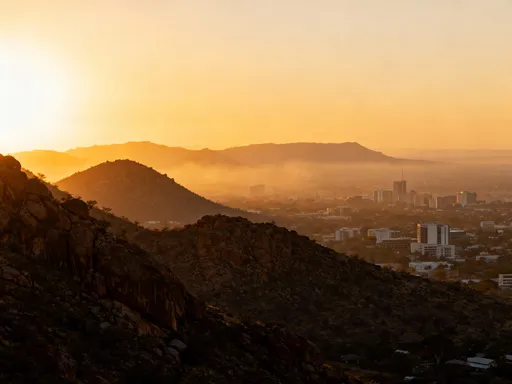
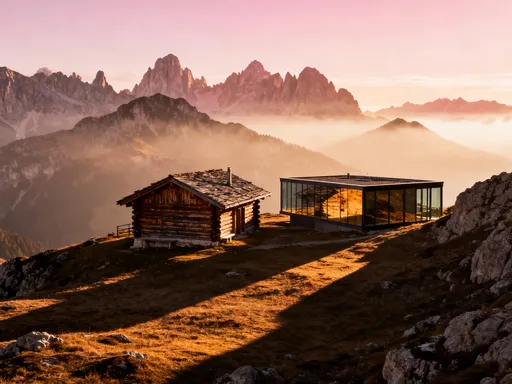
One of the most transformative experiences in Windhoek begins before dawn, on the trail leading to the Auas Mountain Lookout. Just a short drive from the city center, this vantage point offers one of the most breathtaking panoramas in southern Africa. As the first rays of sunlight breach the eastern horizon, the entire valley stirs beneath a soft golden glow. The city, still hushed and dim, gradually comes alive as lights flicker off and streets begin to fill with early commuters. From this elevated perch, Windhoek appears not as a capital, but as a living organism, breathing in the new day.
The hike itself is moderate, suitable for most fitness levels, and takes approximately 45 minutes along a well-marked path. The effort is rewarded not only by the view but by the stillness that surrounds you. At this hour, the only sounds are the rustle of dry grass, the distant call of a bird, and the occasional whisper of wind through the rocky outcrops. This quietude creates a meditative atmosphere, allowing photographers to focus entirely on composition, timing, and light. It’s a moment where technology meets tranquility — the click of a shutter becomes part of the rhythm of nature.
For optimal results, arrive at least 30 minutes before sunrise to set up your equipment and scout the best angles. A tripod is highly recommended, especially for long-exposure shots that capture the slow transition from night to day. Use a wide-angle lens to encompass the vastness of the landscape, and consider adjusting your white balance to preserve the warm tones of the rising sun. As the light intensifies, shadows stretch and shorten dramatically, offering a dynamic range of visual opportunities. This is not merely a photo session; it is an immersion in the natural cadence of the earth, a reminder that some of life’s most powerful moments occur in silence and stillness.
The Heartbeat of the City: Independence Avenue’s Living Canvas
If Auas Mountain offers stillness, Independence Avenue delivers motion — the steady pulse of urban life in Windhoek. As the city’s main thoroughfare, this broad boulevard is where past and present converge. Historic buildings with arched windows and wrought-iron balconies stand alongside modern banks and cafes, creating a layered streetscape that evolves with every block. It is here, in the flow of foot traffic and the rhythm of daily routines, that Windhoek reveals its human side. For photographers, this avenue is a living canvas, constantly repainted by the movement of people, light, and time.
Mid-morning is an ideal time to explore Independence Avenue, when the sun is high enough to illuminate details but not so harsh as to create unflattering contrasts. This is when vendors set up their stalls, office workers pause for coffee, and schoolchildren walk home in neat uniforms. Capturing candid moments requires patience and respect — a smile, a nod, or a simple gesture of acknowledgment can make all the difference. The goal is not to intrude, but to observe with empathy, allowing the authenticity of the scene to speak for itself. A vendor arranging mangoes in a pyramid, a tailor threading a needle in a sidewalk shop, or an elderly woman adjusting her headscarf in the breeze — these are the images that convey the soul of a place.
From a compositional standpoint, the avenue offers strong lines, repeating patterns, and vibrant colors. Use leading lines from the pavement or architecture to draw the viewer’s eye into the frame. Look for natural frames — doorways, windows, or tree branches — that can highlight a subject within the broader scene. The interplay of light and shadow on building facades creates texture and depth, especially on days when scattered clouds filter the sunlight. While street photography thrives on spontaneity, being prepared with the right settings — a fast shutter speed to freeze motion, and an aperture that balances depth of field — ensures you’re ready when the perfect moment unfolds.
Hidden Murals in the Old Town: Art Where You Least Expect It
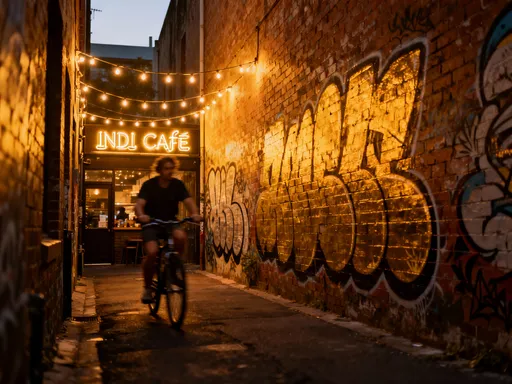
Wandering through the quieter lanes of Windhoek’s Old Town, one discovers a different kind of narrative — one told not in words, but in color, shape, and symbolism. Scattered across alleyways, side walls, and forgotten corners are murals that pulse with creativity and cultural expression. These works of street art, often created by local artists, reflect themes of identity, resilience, and community. They are not commissioned for tourists, nor are they confined to galleries; they exist organically, emerging from the walls like whispers of the city’s inner life.
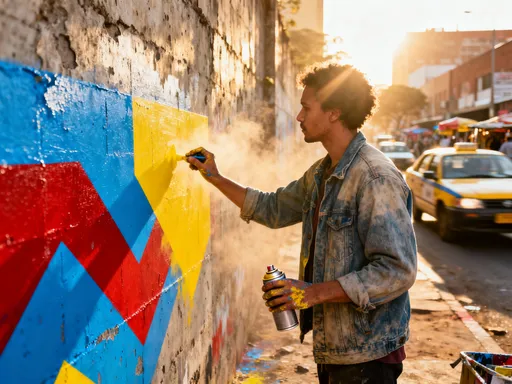
Some of the most striking pieces can be found in areas where colonial-era buildings meet newer structures, a visual metaphor for the city’s evolving identity. One mural might depict a traditional Herero hat in bold geometric patterns, while another portrays a child reaching toward a sky filled with birds, symbolizing hope and freedom. The use of vibrant blues, reds, and yellows contrasts beautifully with the weathered stone and plaster, making the art stand out even more. These murals are not just decorative; they are statements — quiet yet powerful declarations of pride, memory, and aspiration.
When photographing street art, consider the context. A close-up can highlight brushwork and detail, but a wider shot that includes the surrounding environment often tells a richer story. Pay attention to the time of day — late afternoon light casts long shadows that can add drama to flat surfaces. Avoid using flash, as it can wash out colors and disrupt the natural mood. Most importantly, approach these spaces with respect. Many murals are located in residential or working-class neighborhoods, and while they are public, they are also part of people’s daily lives. A quiet presence, a polite demeanor, and a willingness to listen go a long way in ensuring your visit is welcomed.
Katutura Township: Color, Culture, and Real Life
No exploration of Windhoek’s visual soul would be complete without a visit to Katutura, one of the city’s most vibrant and culturally rich neighborhoods. Originally established during the apartheid era, Katutura has evolved into a dynamic community known for its energy, creativity, and warmth. The name itself, derived from the Herero language, means “the place where we do not want to live” — a poignant reminder of its history. Today, it stands as a testament to resilience, where life is lived boldly and authentically, and where every street corner offers a new photographic opportunity.
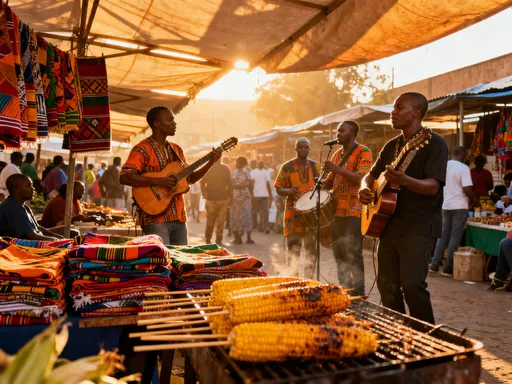
For visitors, the best way to experience Katutura is through a guided tour led by local residents. These tours ensure cultural sensitivity while providing access to places and perspectives that might otherwise remain unseen. A guide can introduce you to artisans selling handmade crafts, musicians rehearsing in open-air studios, and families preparing meals in sunlit courtyards. These interactions are not staged for tourists; they are genuine moments of daily life, rich with emotion and texture. A photograph of a grandmother braiding her granddaughter’s hair, or of a group of boys playing soccer with a ball made of plastic bags, carries a depth that transcends aesthetics.
The visual language of Katutura is one of color and contrast. Brightly painted houses stand side by side, their doors and windows adorned with flowers and fabric. Laundry flutters on lines like flags, catching the wind and sunlight. Graffiti and hand-painted signs add layers of expression, from political slogans to advertisements for local events. For photographers, this is a paradise of composition — every frame teems with life. Use a moderate zoom lens to capture both wide scenes and intimate details. Be mindful of your surroundings and always ask permission when photographing individuals, especially children. A respectful approach fosters trust and often leads to more meaningful connections — and better photographs.
Von Bach Dam: Where Nature Meets Reflection
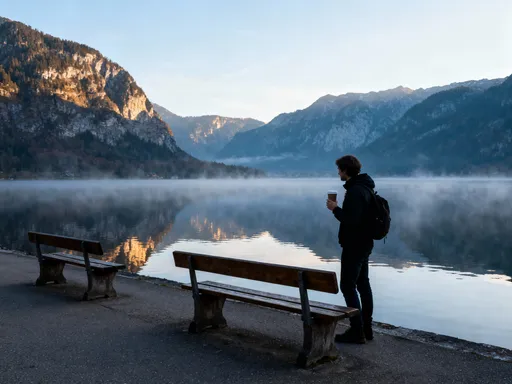
Just a 30-minute drive from Windhoek’s bustling center lies a serene escape that feels worlds away — Von Bach Dam. Nestled in a landscape of rolling hills and acacia trees, this reservoir serves as a vital water source for the region, but it also offers one of the most peaceful settings for nature photography. At dawn or dusk, when the air is still and the light is soft, the surface of the water becomes a mirror, reflecting the sky and surrounding terrain with dreamlike clarity. It is here that the city’s noise fades, replaced by the gentle lap of waves and the calls of waterbirds.
Von Bach Dam is particularly enchanting during golden hour, when the low sun bathes the landscape in warm amber tones. The interplay between light and water creates endless possibilities for reflection shots — a lone tree on the shore doubles in the still surface, or a flock of ducks glides across a sky-turned-lake. Wide-angle lenses excel in this environment, capturing both the expanse of water and the subtle contours of the land. A polarizing filter can help reduce glare and enhance color saturation, especially on bright days. For those interested in wildlife, early morning visits often yield sightings of kingfishers, herons, and even the occasional otter along the banks.
What makes Von Bach Dam special is not just its visual beauty, but its atmosphere of calm. Unlike crowded urban parks or tourist-heavy reserves, this place remains relatively quiet, visited mostly by locals for picnics or quiet walks. This tranquility invites a slower, more contemplative approach to photography. Instead of rushing from one shot to the next, visitors are encouraged to sit, observe, and let the scene unfold naturally. A tripod, a notebook, and a thermos of tea can be as essential as the camera itself. In this space, photography becomes less about capturing and more about experiencing — a lesson in presence that resonates long after the memory card is full.
Why Slowing Down Creates Better Viewing Experiences
In an age of fast travel and instant images, Windhoek teaches a different rhythm — one of patience, attention, and quiet observation. The most powerful photographs are not always the sharpest or most technically perfect; they are the ones that carry feeling, that evoke a memory, that make you pause and wonder. This kind of depth cannot be rushed. It emerges when we allow ourselves to linger — to watch how light changes over an hour, to listen to the sounds of a neighborhood, to wait for the right moment when a child’s laughter aligns perfectly with the angle of the sun.
Slowing down transforms photography from a task into a practice — a way of engaging with the world rather than merely documenting it. In Windhoek, this mindset reveals layers that might otherwise go unnoticed: the way a street vendor arranges her fruit with quiet pride, the pattern of cracks in a centuries-old wall, the fleeting expression on a passerby’s face. These details form the true narrative of a place, one that cannot be captured in a single snapshot, but only through sustained attention.
Moreover, mindful observation fosters respect. When we take the time to understand a culture, to learn from its people, and to honor its spaces, our photographs become more than souvenirs — they become acts of connection. This is especially important in a city like Windhoek, where history and identity are deeply interwoven with the landscape. By moving slowly, listening carefully, and photographing thoughtfully, travelers contribute to a more authentic and ethical form of tourism — one that values dignity over spectacle.
Ultimately, the goal is not to fill a memory card, but to fill the heart. The best images are those that stay with you, not because they are perfect, but because they remind you of how you felt in that moment — the cool morning air on your skin, the warmth of a stranger’s smile, the stillness of a city waking up. These are the moments that shape a journey, that linger in memory long after the photos have been shared and saved.
Windhoek does not shout for attention. It does not dazzle with neon lights or crowded landmarks. Instead, it reveals itself gradually, to those willing to look closely and stay a while. Its magic lies in the quiet corners, the overlooked alleys, the moments between moments. Whether you come with a camera or simply with open eyes, the city invites you to slow down, to breathe, and to see — not just the place, but the life within it. Let the light guide you. Let the stories unfold. And let Windhoek show you that the most unforgettable views are often the ones you never expected to find.