You Won’t Believe These Mountain Homes in the Dolomites
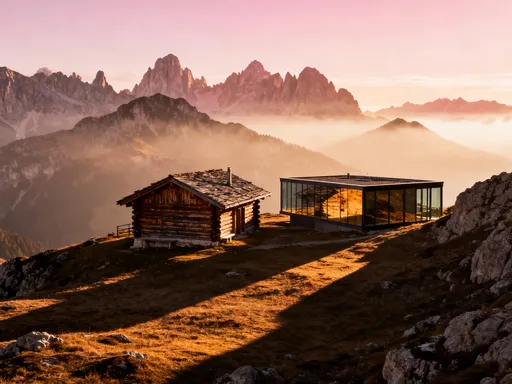
Nestled in northern Italy, the Dolomites aren’t just about jagged peaks and ski slopes—they’re home to some of the most unexpected architecture on Earth. I was stunned to find centuries-old stone baite (alpine huts) standing beside sleek glass-and-wood modern retreats. This clash of old and new creates a visual story unlike anywhere else. It’s not just scenery—it’s culture carved in wood, stone, and steel, rising from the alpine mist like something out of a dream. The mountains do not merely frame these homes; they shape them, inspire them, and in many cases, seem to birth them directly from the rock. Here, architecture is not imposed on nature—it is born from it.
First Glimpse: When the Mountains Reveal Their Secrets
Approaching the Dolomites by car or train, one begins to sense a transformation in the landscape long before the peaks dominate the horizon. The foothills roll gently at first, dotted with meadows and small stone bridges, but then the earth rises abruptly, folding into sheer cliffs and towering spires of pale limestone. It is in these dramatic transitions that the first signs of human presence appear—not as intrusions, but as natural extensions of the terrain. Villages cling to slopes like lichen on stone, their rooftops aligned with the angles of the mountainside. Houses are built into the hillside, their foundations merging with outcrops, their walls echoing the gray and gold hues of the surrounding rock.
What strikes visitors immediately is the harmony between structure and setting. These are not homes plopped onto the landscape; they appear to have grown from it. The use of local materials is key—Ladin stone, a type of dolomite rock quarried nearby, gives buildings a grounded, earthy tone. Timber from larch and spruce, weathered to silvery gray over decades, frames windows and supports overhanging eaves designed to shed heavy snow. Even the placement of doors and windows follows practical alpine logic: south-facing for sunlight, sheltered from northern winds, and elevated above potential snowdrifts.
Beyond the physical design, there is a cultural presence that permeates the region—the Ladin people, a Romance-speaking minority with roots stretching back over a thousand years. Their language, traditions, and craftsmanship have shaped the architectural identity of the Dolomites in subtle but enduring ways. Wooden carvings above doorways, painted shutters in deep green or rust red, and family crests etched into stone lintels all speak of a community deeply connected to place and lineage. To walk through these villages is to witness a living heritage, where every beam and stone carries memory.
The Heart of Alpine Life: Traditional Baite and Farmhouses
At the core of Dolomite architecture are the baite—modest, gabled structures that once served as seasonal shelters for shepherds and farmers tending high-altitude pastures. These small wooden huts, often no larger than a single room, were built to withstand extreme conditions: biting winds, months of snow cover, and dramatic temperature shifts. Their design reflects centuries of adaptation. Thick larch wood walls, sometimes more than 30 centimeters deep, provide natural insulation. Roofs slope sharply to prevent snow accumulation, and the entire structure is raised on stone piers to protect against moisture and frost heave.
Inside, the simplicity is striking. A central hearth or small stove provided heat and cooking capability. Sleeping lofts were tucked under the rafters, accessible by wooden ladders. Storage spaces were carved into walls or built beneath benches. There was no excess—every element had a purpose. Yet within this austerity, craftsmanship flourished. Door hinges were forged by hand, floorboards smoothed by years of foot traffic, and ceiling beams often bore faint chisel marks from the original builders. These details, worn soft by time, give the baite a quiet dignity.
Today, many of these alpine huts have been restored and repurposed. Some serve as mountain refuges for hikers, offering basic shelter and warm meals. Others have been transformed into private homes or boutique guest accommodations, where modern comforts are carefully integrated without disrupting the original character. Insulation may now be enhanced with eco-friendly materials, and solar panels discreetly installed on southern roofs, but the soul of the baite remains intact. Their enduring appeal lies not only in their beauty but in their wisdom—structures that work with nature, not against it, embodying principles of sustainability long before the term entered common use.
Stone and Soul: The Ancient Churches and Watchtowers
Rising above the village rooftops, often perched on elevated ground, stand the region’s historic churches and watchtowers—silent witnesses to centuries of alpine life. These stone structures, built between the 12th and 18th centuries, served both spiritual and defensive purposes. Their thick walls and narrow windows offered protection during times of conflict, while their bell towers called communities to prayer and marked the rhythm of daily life. Constructed from locally quarried stone and slate, they blend seamlessly into the mountain palette, their spires reaching skyward like natural extensions of the peaks.
Inside, the atmosphere is one of quiet reverence. Faded frescoes line the walls, depicting saints, biblical scenes, and alpine motifs such as grazing sheep and mountain flowers. Wooden altars, intricately carved by local artisans, reflect a deep devotion and attention to detail. The scent of aged wood and candle wax lingers in the air, and sunlight filters through small stained-glass windows, casting colored patterns on stone floors worn smooth by generations of footsteps. These spaces are not museum pieces—they remain active places of worship, especially during festivals and religious holidays, when villagers gather in traditional dress to celebrate their heritage.
Equally significant are the remnants of defensive architecture—stone watchtowers and fortified farmhouses that once guarded trade routes and village entrances. Positioned on ridges or hilltops, these structures offered early warning of approaching threats. Though many now stand in partial ruin, their presence adds a layer of historical depth to the landscape. In recent decades, community-led preservation efforts have restored several of these sites, reinforcing the connection between cultural identity and built environment. Restoration projects often involve local stonemasons using traditional techniques, ensuring that the repairs remain true to the original craftsmanship. This commitment to authenticity reflects a broader value: that preserving the past is not about nostalgia, but about maintaining continuity in a rapidly changing world.
Reinvented Ridges: Modern Architecture Meets the Wild
While the Dolomites honor their architectural heritage, they are far from frozen in time. In recent decades, a new wave of design has emerged—one that embraces the boldness of contemporary aesthetics while remaining deeply rooted in the landscape. Architects from across Europe have been drawn to the region, inspired by its dramatic forms and pristine environment. The result is a collection of modern homes and lodges that push creative boundaries without disrupting the natural setting.
These structures often feature clean lines, expansive glass facades, and cantilevered forms that seem to hover above the terrain. Yet rather than clash with their surroundings, they are designed to reflect them. Glass walls mirror the shifting colors of the sky and forest. Wooden cladding, sourced from sustainably managed forests, weathers naturally over time. Rooflines echo the jagged silhouettes of the mountains, and materials are chosen to age gracefully, blending into the environment rather than standing apart from it. Some homes are partially buried into the hillside, using the earth for thermal mass and minimizing visual impact.
One notable example is a private residence near the Alpe di Siusi plateau, where a glass-walled living area extends over a slope, offering uninterrupted views of the Sassolungo massif. The home’s foundation is anchored into bedrock, and its heating system relies on geothermal energy, making it nearly self-sufficient. Another is a boutique mountain lodge in Val Gardena, where angular steel beams support a floating roofline that mimics the shape of a traditional baite but reinterpreted through a modern lens. These designs demonstrate that innovation and tradition need not be at odds—when done thoughtfully, they can elevate each other.
What unites these modern projects is a deep respect for context. Architects do not seek to dominate the landscape but to engage in dialogue with it. They study sun angles, wind patterns, and seasonal light to optimize both comfort and sustainability. The goal is not spectacle, but integration—a home that feels inevitable, as though it could exist nowhere else. In this way, contemporary architecture in the Dolomites becomes a continuation of an ancient conversation between people and place.
Where Old and New Live Together: Village Contrasts
Nowhere is the balance between tradition and innovation more evident than in the region’s villages. Towns like Ortisei, Corvara, and San Candido offer a fascinating architectural tapestry, where centuries-old buildings stand shoulder to shoulder with modern interventions. In Ortisei, a baroque church with an ornate wooden altar shares the village square with a sleek cultural center clad in larch wood and glass. In Corvara, a 17th-century farmhouse has been expanded with a minimalist extension that uses floor-to-ceiling windows to frame views of the Puez-Odle Nature Park.
These juxtapositions are not accidental—they are the result of careful planning and community engagement. Local zoning regulations protect historic facades and building heights, ensuring that new developments do not overwhelm the traditional character of the towns. At the same time, architects are encouraged to innovate within these constraints, leading to creative solutions that honor the past while embracing the future. For instance, a historic inn in San Candido recently added a modern wing with a green roof planted with native grasses, allowing the expansion to blend into the surrounding meadow.
What makes these mixed neighborhoods so compelling is their authenticity. This is not a curated tourist display but a lived reality. Families continue to inhabit ancestral homes, passing down stories and traditions, while younger generations adapt them for modern life. A grandmother may still bake bread in a wood-fired oven in the basement, while her grandson works remotely from a sunlit study added to the attic. These homes are not frozen in time—they are evolving, much like the culture they house.
The coexistence of old and new reinforces a sense of cultural continuity. It shows that heritage is not something to be preserved behind glass but something to be lived, adapted, and reinterpreted. When visitors walk through these villages, they are not just seeing buildings—they are witnessing a dynamic process of identity formation, where every renovation, addition, and restoration is a statement of values.
How to Experience It: Travel Tips for Architecture Lovers
For those eager to explore the architectural wonders of the Dolomites, timing and planning can make all the difference. The best seasons to visit are late spring (May to early June) and early autumn (September to October), when the weather is mild, the skies are clear, and the landscape is at its most photogenic. Summer brings hikers and tourists, while winter focuses on skiing—both are beautiful, but shoulder seasons offer quieter roads and better light for viewing and photographing buildings.
Hiking remains one of the most rewarding ways to experience the region’s architecture. Trails like the Alpe di Siusi, the largest high-altitude meadow in Europe, offer panoramic views of traditional baite scattered across the plateau. The Seceda Ridgeline Trail provides dramatic vistas of Ortisei and its surrounding villages, where the contrast between old and new architecture is especially visible. For a more structured experience, several local organizations offer guided architecture tours led by historians and architects who explain construction techniques, cultural significance, and design evolution.
Photographers will find endless inspiration. Early morning light bathes stone walls in warm gold, enhancing texture and depth. Late afternoon sun casts long shadows across rooftops, highlighting architectural details. Reflections in mountain lakes—such as Lago di Braies or Lago di Carezza—can double the visual impact, creating mirror images of churches and homes against a backdrop of peaks. A polarizing filter helps reduce glare on glass surfaces, while a wide-angle lens captures the full scale of mountain-integrated homes.
For a deeper connection, consider staying in a restored baite or a design-forward boutique hotel. Properties like those in the Badia Valley offer authentic alpine charm with modern amenities, often run by families who have lived in the region for generations. These accommodations provide not just comfort but context—hosts may share stories about their homes, point out hidden architectural details, or recommend lesser-known trails. Traveling with awareness—respecting local customs, supporting family-run businesses, and treading lightly on the land—ensures that the beauty of the Dolomites endures for future generations.
Why It Matters: Architecture as Cultural Memory
The buildings of the Dolomites are more than shelters from the elements—they are vessels of memory, resilience, and identity. Each stone laid, each beam carved, each window positioned with care tells a story of adaptation to a demanding environment. The baite speak of seasonal migrations and pastoral life. The churches bear witness to faith and community. The modern homes reflect a commitment to sustainability and innovation. Together, they form a living archive of human response to nature’s grandeur and challenge.
In an age of rapid urbanization and homogenized design, the Dolomites offer a powerful alternative: a model of architecture that listens to its surroundings. The region demonstrates that progress does not require erasing the past, nor does preservation mean rejecting change. Instead, it shows how tradition and innovation can coexist in a way that enriches both. The use of local materials, passive heating techniques, and landscape-sensitive design in historic buildings aligns remarkably well with today’s sustainability goals—proving that old wisdom often holds the key to modern solutions.
Beyond aesthetics and function, these structures foster a deeper connection to place. They remind us that homes are not just containers for life but participants in it. They shape how we live, how we relate to our neighbors, and how we understand our history. When a child climbs the same wooden stairs that their great-grandfather once used, or when a family gathers in a restored baite for a holiday meal, architecture becomes a thread of continuity across generations.
To travel through the Dolomites is to witness a landscape where culture and nature are in constant conversation. It invites us to look beyond the postcard views and see the mountains not just as geological formations, but as cultural landscapes shaped by centuries of human care. The homes here do not merely occupy the terrain—they belong to it. And in that belonging, they offer a quiet lesson: that the most enduring designs are not those that conquer nature, but those that grow from it, with respect, humility, and vision.